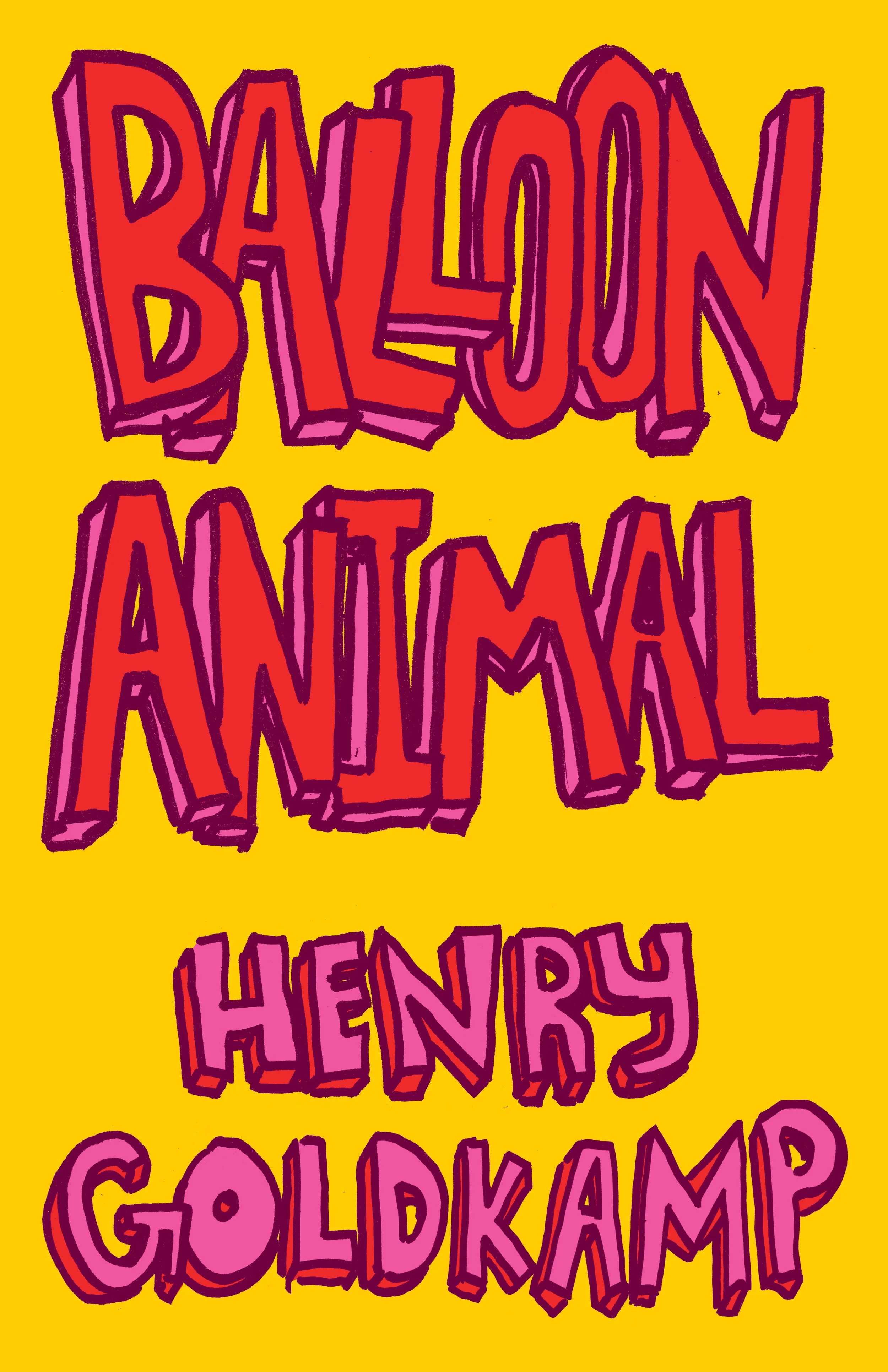
Balloon Animal (Cloak, 2026)
Purchase here
What I love most about Henry Goldkamp’s work is the way it hovers around the boundary between anxiety and humor, where it’s hard to tell if what we’re seeing/experiencing/engaging in is funny or… very, very scary (because it’s the void, the darkness which surrounds us from the very famous poem). There is the discomfort of wondering why we’ve all been gathered here: the audience, the performers, the writer hiding somewhere in plain sight. Are we meant to learn something, to forget something, where am I supposed to look? What is it that we wanted and what does it mean to have wanted it. And now the clown is laughing at us, and we feel that he’s right to. But then he takes out some outrageous prop, a horse, a giant pencil (out of sympathy? for our sake?) so we can stop thinking about ourselves for once. —Courtney Bush
Balloon Animal is a spectacle, an absurd trick of performance, plastic language with life breathed into it, twisted in the deft hands of Henry Goldkamp to become something that mad-dashes about the page, floating and diving and leaping, always at risk of exploding but letting us revel in the thrill of wondering if and when it will. These poems whistle and go silent and pop. They have props and characters and costumes. It's hard to imagine them performed aloud but within these pages we are offered the distinct pleasure of trying to imagine how performance-poet-extraordinaire Henry Goldkamp might. And indeed, his clown-host-speaker-ventriloquist does make anything—from collapse of nation, to undermining the universe's dictate to shop, to reading a poem while eating a tunafish sandwich—seem impossibly possible. —Juliet Gelfman-Randazzo
Crucial to Henry Goldkamp’s work is a relentless assault on poetic sentimentality, decorum, good manners, so-called “empathy,” doing things the right way. But despite the chaos, instability, and cruelty of its form and content, and despite the oft-seeming hostility of its position against the reader and audience, at its core Balloon Animal is social, communal, and hopeful. Goldkamp rightfully questions the technology of the lyric, whether it has retained any usefulness in the present form that we have inherited. All normative conceptions of scale are destroyed, jettisoned, thrown from the window—but these experimental blow-outs ultimately serve to dismantle capitalist power systems, and construct something new in the rainbow-colored ashes left behind. Profanely sacred, wondrously vile, terrifyingly joyful: This poetry cares about us. —Alex Tretbar
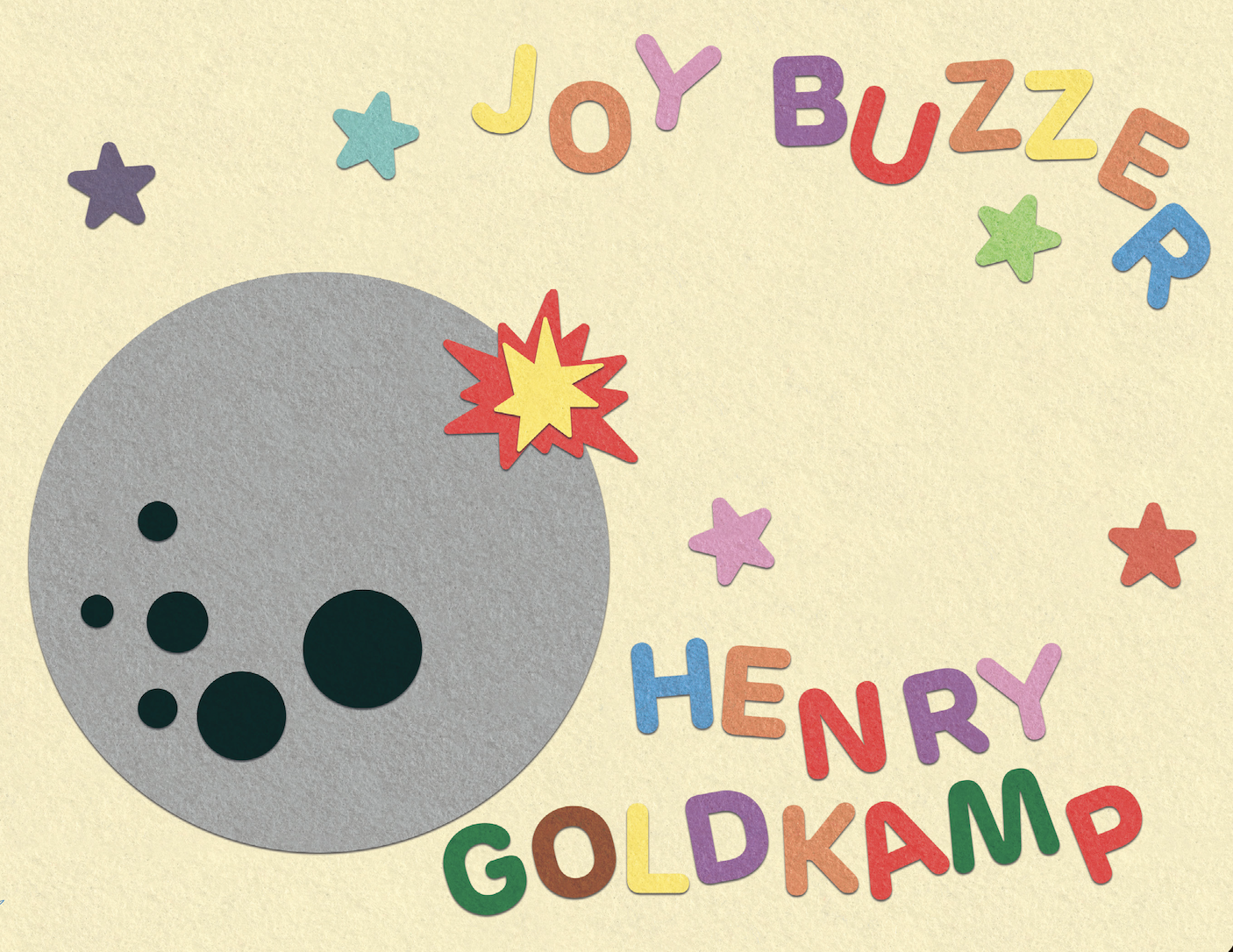
JOY BUZZER (Ricochet Editions, 2025)
Purchase here
Review in DIAGRAM by Will Cordeiro
Review in Coma by olga mikolaivna
Interview in Air/Light by David Haydon
Interview in Jacket2 by Mayookh Barua
JOY BUZZER flips off the voltaic artifice of the gag greeting to deliver a page-breaking stand-up elegy to all the readers in the audience. At the speed of fun, virtuoso poet-clown Henry juggles conceptual gags and prop poetry with the punchy poetics of an éclair de loon dancing and pratfalling at the avant-cringe of performance. —Stine An
“Clown Poetics”, Henry Goldkamp’s singular and transformative contribution to avant-garde poetry, is fully on display in this debut collection. As Goldkamp’s ‘spectator-distributive’ performances catch fire in city after city, JOY BUZZER is instantly a must-have volume for those interested in either questioning or exploding to smithereens the lectern/sermon method of doing poetry. —Rodrigo Toscano
Both an endless loop of “HELLO” and one long goodbye to “[name],” Goldkamp’s book-length exercise in “clown poetics” shocks with the sharpness of a mime’s knife, cutting through the pain/pleasure of language and shattering the shiniest mirrors of polite society. Catastrophic, hilarious, and importantly stupid, Joy Buzzer is dangerous fun for the whole family. —Paul Cunningham
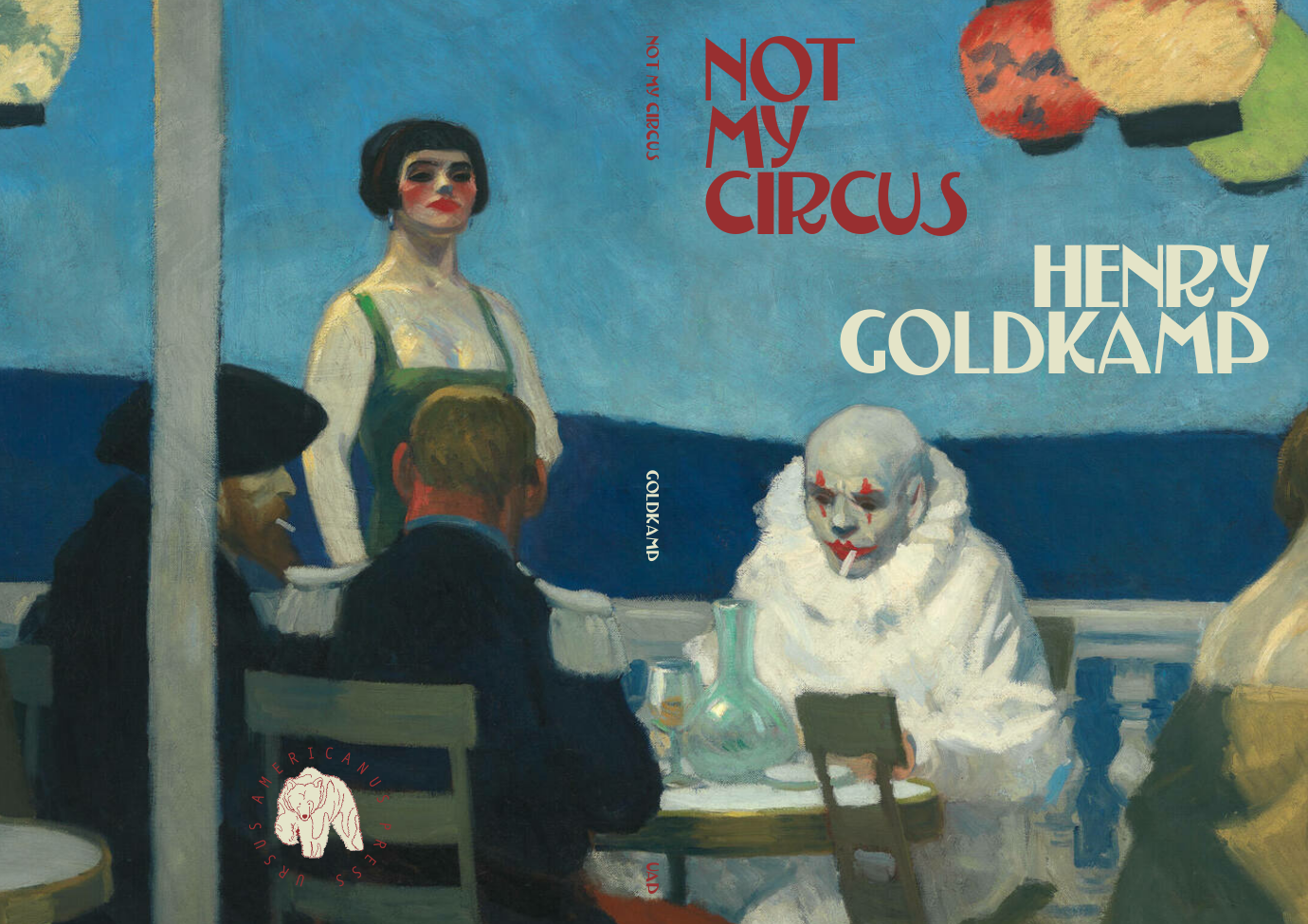
Not My Circus (Ursus Americanus, 2025)
Review in DIAGRAM by Will Cordeiro
The inevitable trajectory of our consumerism laid bare. Our obliteration through postmodern capitalism expressed in ticklish terms. However, tickling without cessation turns eventually into torture. Goldkamp's poems take us right up to that threshold before they release us. Were we laughing or crying all along?